
If you run a business in the Philippines, you have probably heard “SEO” mentioned by a marketing vendor, a competitor, or a nephew who does freelance work. Chances are you have not acted on it. That is common, and it is getting expensive.
The Philippines had 98.0 million internet users at the end of 2025, or 83.8% of the population, according to DataReportal’s Digital 2026: The Philippines report published in November 2025. That leaves 16.2% offline, which means the large majority of your customers, suppliers, and competitors are already searching, comparing, and deciding online before they ever contact a business directly.
This guide explains what SEO actually is, why 2026 is a harder year to sit on the sidelines than 2025 was, what a professional SEO program includes, and why Arc Innovation and Insights, with over eight years in Philippine digital marketing, is positioned to run one for you.
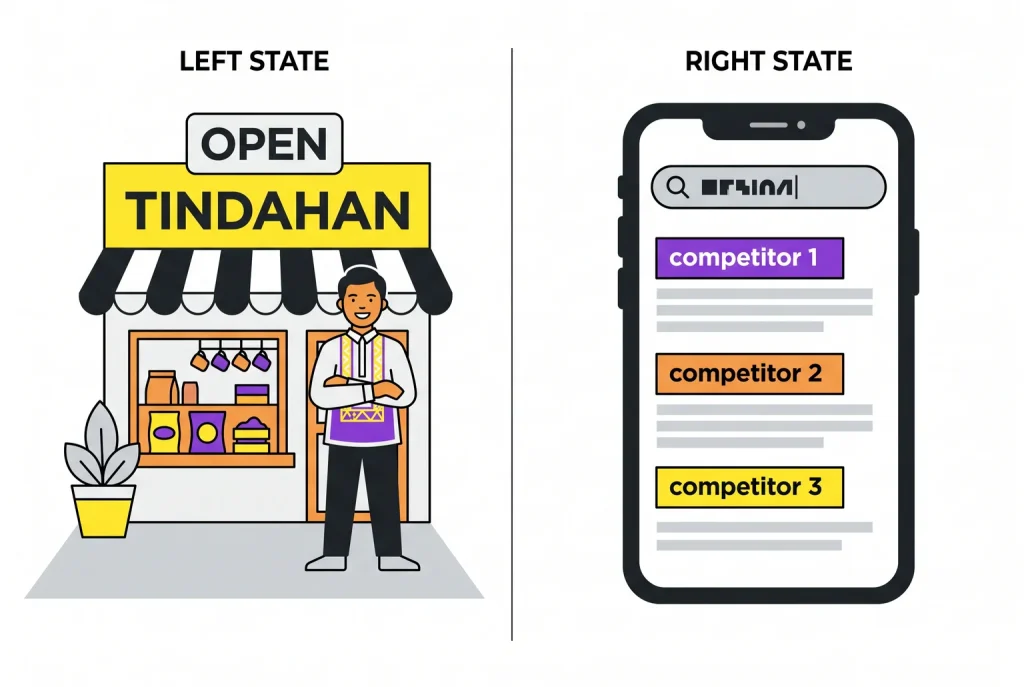
SEO stands for search engine optimization. Google’s own SEO Starter Guide defines it as the process of making a website better for search engines, so that they can crawl, index, and understand your content, and so that searchers can find your site and decide whether it’s worth visiting. It usually involves small, ongoing changes to a website’s structure, content, and technical setup that add up to better visibility over time.
A few related terms come up often enough that they’re worth defining now.
Organic search refers to the unpaid, ranked results a search engine shows for a query. SEO is the work of improving your position in those results.
SEM (search engine marketing) once covered both organic SEO and paid search, but common usage now narrows SEM to mean paid advertising, like Google Ads campaigns you pay for by the click.
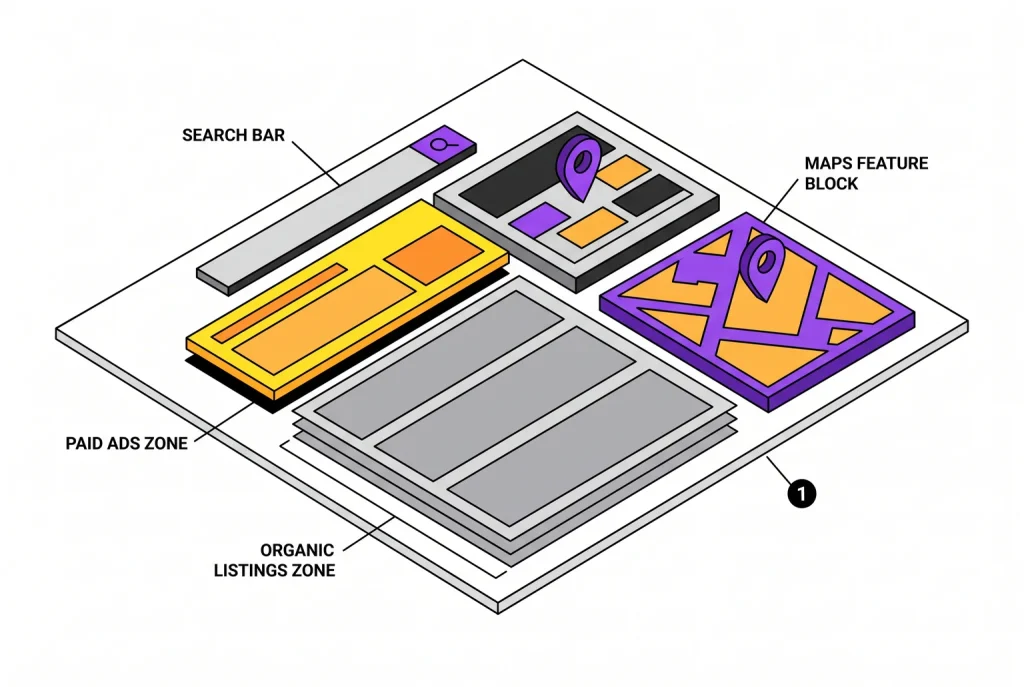
A SERP is the search engine results page, the screen that appears after someone types a query. It typically mixes organic listings with paid ads, maps, and other features, so ranking well organically and running ads are two separate ways to appear on the same page.
With those terms defined, the next question is why acting on them in the Philippines specifically has gotten more urgent heading into 2026.
The Philippines closed out 2025 with 98.0 million internet users, an 83.8% penetration rate, and 137 million cellular mobile connections, or 117% of the total population, according to the Digital 2026: Philippines report from DataReportal. Most of that activity happens on a phone screen. A February 2025 ranking placed the Philippines first among countries by mobile share of web traffic, at 87.64%, and separate 2026 estimates put mobile’s share of internet activity at around 78%. If your website is slow to load or hard to read on a small screen, you’re losing a large share of the market before they even see what you sell.
Search sits at the center of how Filipinos decide what to buy. Google Search and YouTube are involved in 75% of purchase journeys where consumers discover a new brand, product, or retailer, based on Ipsos data. Separately, Filipino shoppers typically run six to seven searches while weighing two to three brands before buying, and 90% of internet users have searched online for a product or service they intended to purchase.
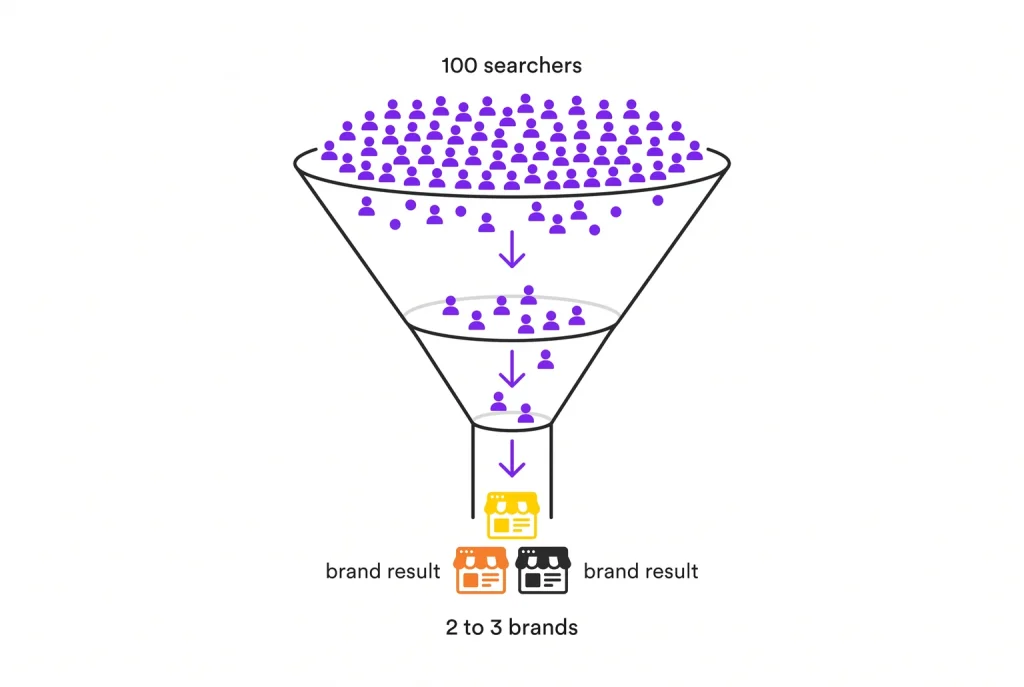
None of this guarantees your business is one of the two or three brands a searcher lands on. If a competitor’s page loads faster, answers the buyer’s question more directly, or simply ranks higher, they get the click and the inquiry. That gap doesn’t stay open. Once a rival’s site earns rankings for the terms your customers search, displacing them takes more time and more budget than getting there first would have. The businesses treating search visibility as routine maintenance in 2026 are the ones setting the terms for everyone entering the market after them.
SEO providers bundle their work differently, but a program that covers the fundamentals generally includes seven parts:
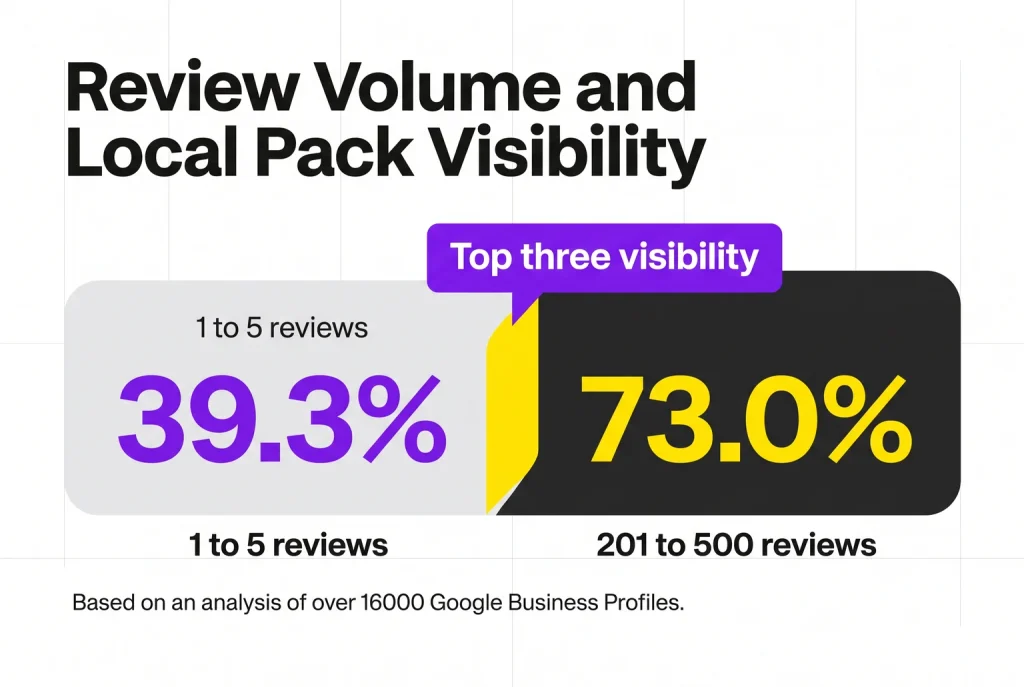
Local SEO deserves a closer look for Philippine businesses with a physical shop or a defined service area. Google weighs three factors here: relevance, distance, and prominence. Review volume plays a bigger role than most business owners assume. Profiles with 1 to 5 reviews reach top-three visibility only 39.3% of the time, compared to 73.0% for profiles with 201 to 500 reviews, based on an analysis of over 16,000 Google Business Profiles. Primary category selection is consistently cited as the single strongest lever for local relevance.
A provider who can’t explain which of these seven areas they’re working on, and why, is not running a real program.
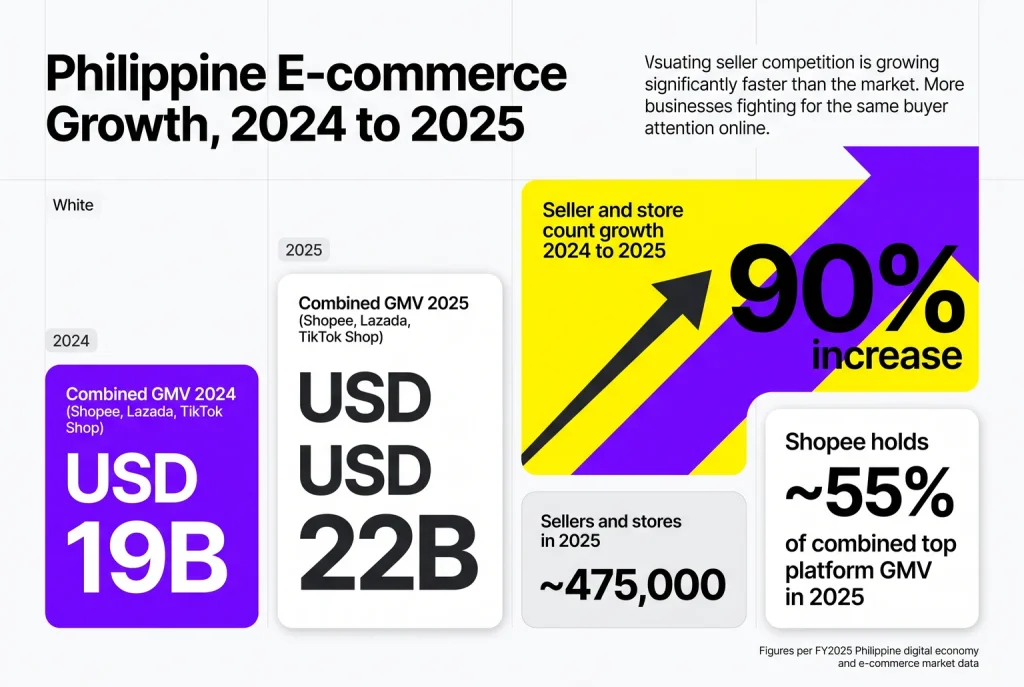
Combined gross merchandise value across Shopee, Lazada, and TikTok Shop in the Philippines hit USD 22 billion in FY 2025, up 15% from USD 19 billion the year before, with Shopee alone holding roughly 55% of that total, according to data compiled by Cube. The broader digital economy was on track for USD 36 billion in GMV in 2025, and the number of sellers and stores grew 90% year over year to around 475,000, based on Inquirer Business reporting. More sellers chasing the same buyers means more competition for the same search results.
Your goal is probably more inquiries, more calls, or more sales, and most of that demand starts with a Google search, which handles over 97% of search traffic in the Philippines, according to Digital Marketing Philippines. A 2026 analysis of Filipino SMEs found that 77% want better digital tools, but many remain invisible in search results, which costs them leads during the exact moment customers are deciding where to buy, per Flex. If a competitor has already claimed page one, your business isn’t part of that decision at all.
Arc Innovation and Insights is a Makati-based digital marketing agency with more than eight years across SEO, content, branding, and web development. That range matters because SEO doesn’t work in isolation. A technically sound site still needs content that answers what buyers are actually searching for, a Google Business Profile that’s actively managed, and design decisions that don’t slow pages down.
Arc’s SEO services follow the same structure covered earlier in this guide: technical foundations like crawlability and site architecture, content built around real search intent, authority built through internal linking and ethical link building, and regular reporting on rankings, traffic, and conversions rather than rankings alone.
The agency positions itself as a long-term partner rather than a one-off vendor, which fits how SEO actually works. Rankings build over months, not a single campaign cycle, and a partner who understands your business goals can adjust the program as your market and competitors shift.
If your business depends on customers finding you online, the next move is a direct conversation about where your search visibility stands today. Arc’s SEO services page outlines what a program with Arc actually covers, from technical fixes to local search visibility, and includes a straightforward way to book a consultation or request a website audit. You can also see how SEO fits into Arc’s broader work in content, branding, and web development on the main SEO page.
The 98 million Filipinos searching online every day aren’t waiting for your business to catch up. Arc’s role is to make sure they find you first, with strategy built around your actual customers and reporting that shows what that visibility is worth in traffic and inquiries, not just rankings on a screen.
Input your search keywords and press Enter.