
September 7, 2026
If your website looks fine but isn’t bringing in inquiries, calls, or sales, the problem probably isn’t the design. It’s whether the site was built to produce a business result in the first place.
This is worth checking now because Filipino customers spend more time online than almost anyone else in the world. Filipino internet users aged 16 to 64 spend close to 8 hours and 52 minutes online per day, and nearly all of them, 98.9 percent, go online using a mobile phone. That’s a lot of potential customer attention, and a website that doesn’t convert it into leads or sales is leaving money on the table.
At the same time, only about 10% of Philippine MSMEs are fully digitalized, and many businesses still rely mainly on Facebook pages instead of a proper website. Reliable national numbers on how many SMEs actually own a website are hard to find, but the pattern is clear: having an online presence and having one that works are two different things.
This guide is built around that distinction, using business outcomes, not appearance, as the measure of a good website.
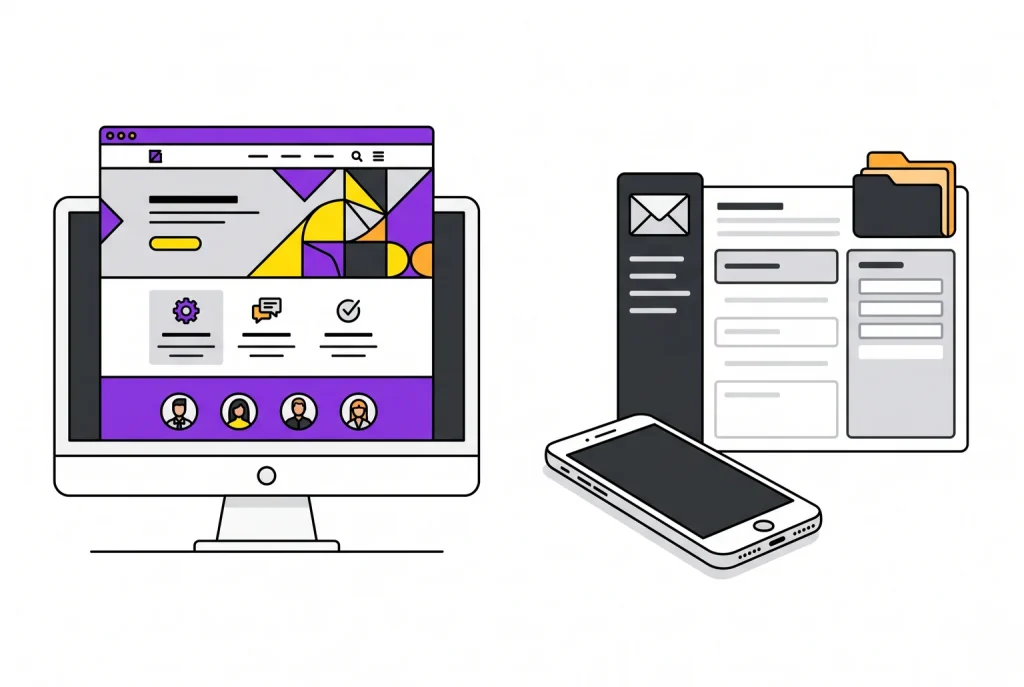
A template site uses a pre-made design and layout, usually built through a website builder like Wix, Squarespace, or a WordPress page builder such as Elementor or Divi. You drag, drop, and fill in your content, and the platform handles the rest. For a simple brochure page or a business with a tight budget, that trade-off can be reasonable.
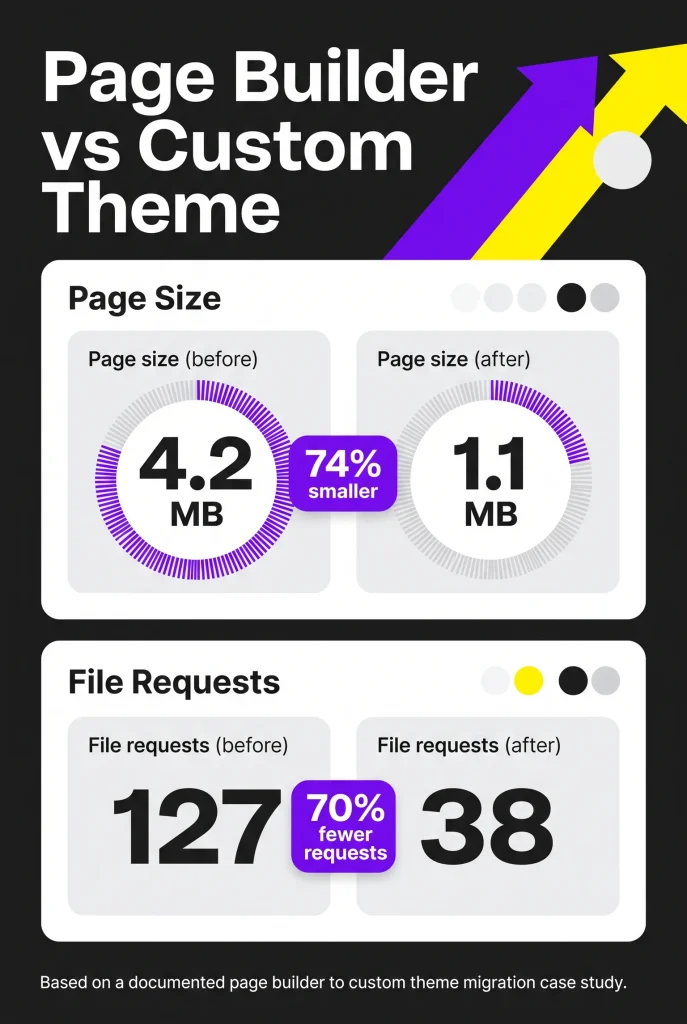
The problem shows up as the site grows or the business depends on it more. Page builders often generate extra code behind the scenes, loading style sheets and scripts for sections you’re not even using. Elementor alone typically loads 300 to 500 KB of CSS and JavaScript by default, and Divi often adds more. One documented case of switching from a page builder to a custom WordPress theme cut total page size from 4.2 MB to 1.1 MB, a 74 percent drop, and reduced the number of files the browser has to fetch from 127 to 38.
For a business owner, this translates into slower load times, worse mobile performance, and search rankings that suffer because Google factors page speed into visibility. Templates also give you less control over technical SEO settings and become harder to adapt once you need custom booking systems, local landing pages, or specific e-commerce features. None of this means templates are always the wrong choice. It means the choice should match what the business actually needs the site to do.
A results-driven website is not one feature done well. It’s several working together. Here’s what each pillar means in practice.
UI/UX design is how the site looks and how easy it is to use, from navigation to button placement to how forms behave. A well-crafted interface can lift conversion rates by up to 200%, and an optimized overall experience by up to 400%, according to Squareboat’s analysis. Even small fixes to checkout flows or signup forms have been shown to move conversions by 20 to 200%.
Clean, scalable code is the underlying structure that lets a site be updated, expanded, or fixed without breaking other parts. Maintenance can eat up 80 to 90% of a system’s total lifetime cost, based on NASA’s software engineering guidance, so code built to be maintained from day one saves money later, not just at launch.
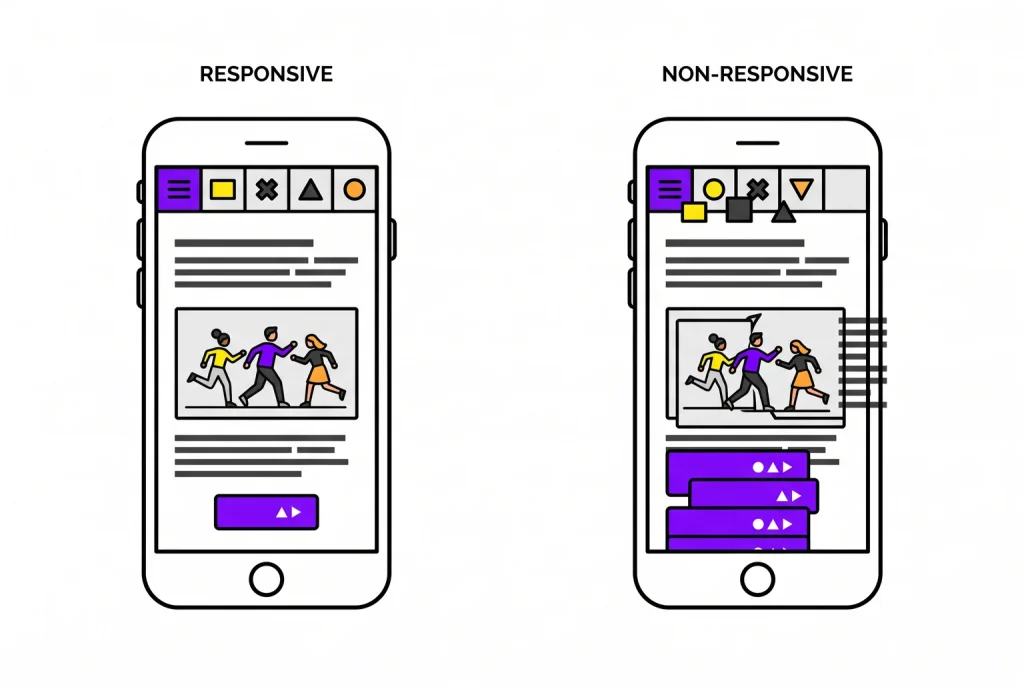
Mobile responsiveness means the site works properly on a phone screen, not just a desktop monitor. This is not optional in the Philippines, where 97.8% of the country’s 98 million internet users go online through mobile phones, per DataReportal’s 2026 figures. A site that’s awkward on mobile is turning away almost everyone.
Performance optimization covers load speed and how efficiently a page runs. Each extra second of load time can cost around 7% of conversions, which adds up fast for a business relying on online inquiries or sales.
Security means HTTPS, SSL certificates, and basic protections against data theft. Consumers notice: 67% of shoppers won’t buy from a site without an SSL certificate, and 84% abandon a purchase if the connection looks unsecure, per urllo’s research.
E-commerce integration is the payment and checkout setup. For Philippine businesses, this usually means connecting a local gateway that supports GCash and Maya alongside cards, rather than integrating each wallet separately, as TUL-ID Digital explains.
Check these against your own analytics and customer feedback before deciding whether a rebuild is worth it.
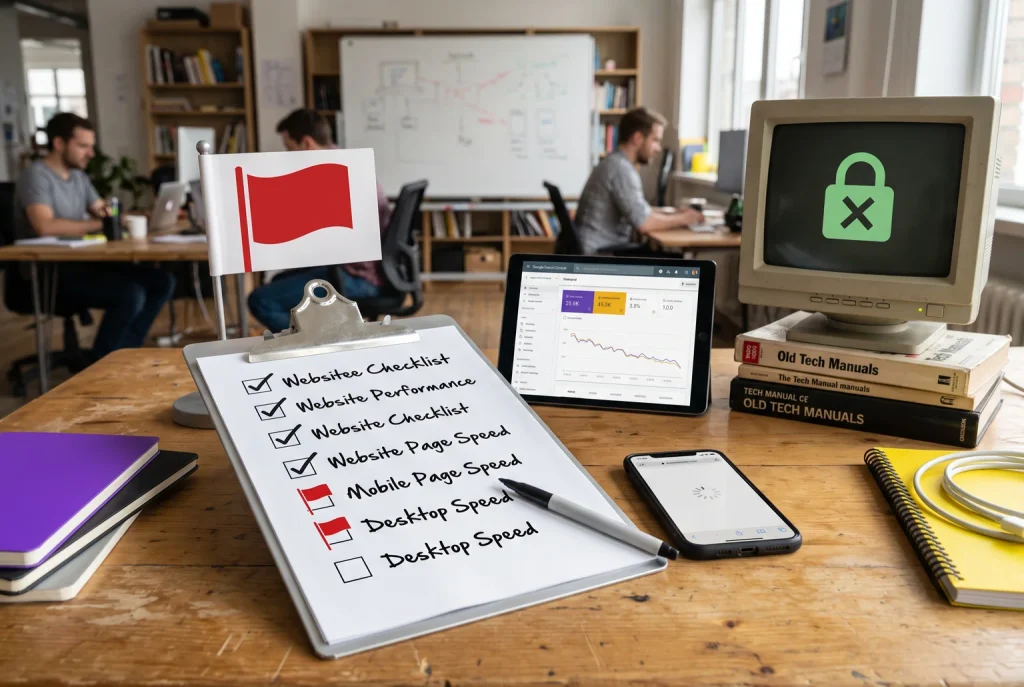
One or two of these on their own aren’t necessarily urgent. Several appearing together, particularly slow mobile load times paired with weak calls to action and falling conversions, is a stronger signal that the site needs real work, not just a content refresh.
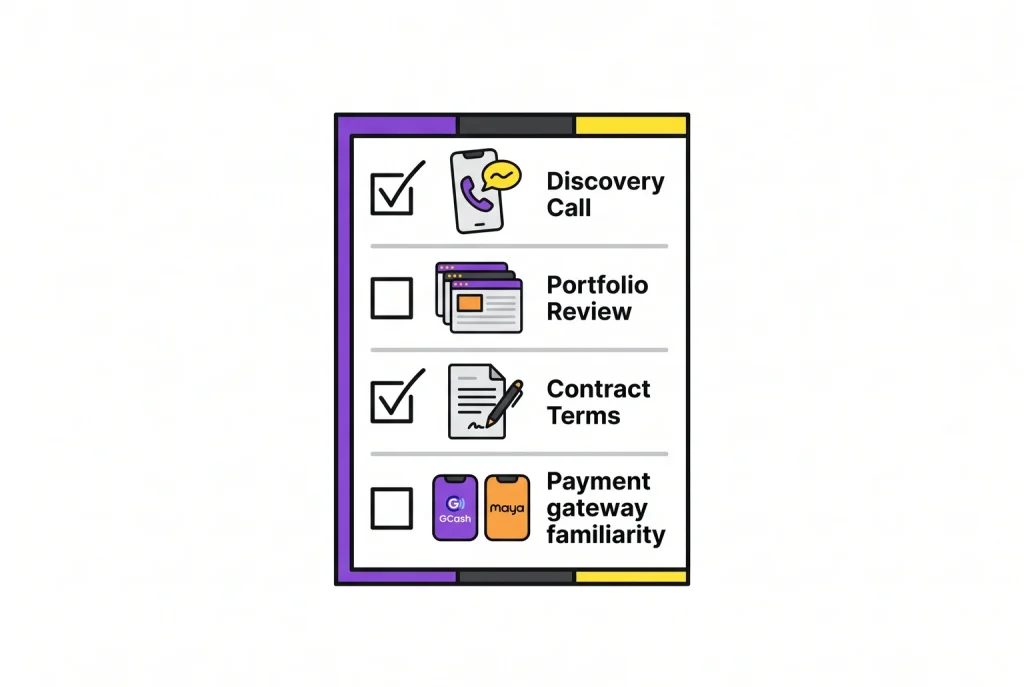
Once a rebuild looks necessary, the next decision matters just as much: who builds it. A good discovery process comes before design work starts, with a partner asking about your business goals, your customers, and how you’ll measure success, not just your color preferences. Ask to see recent, live examples relevant to your industry, and judge them on results, not just visuals.
Get specifics in writing: itemized pricing that separates design, development, content, and maintenance, plus a proposal defining deliverables, timelines, and what happens if scope changes. Confirm who actually owns the domain, hosting, source code, and CMS access once the project ends, and who will do the work, since some agencies subcontract without saying so.
Ask how they test the site across devices and browsers, and what post-launch support looks like: response times, security patches, and ongoing tweaks. Agencies offering continuous account management handle post-launch changes better than those built for one-off delivery.
For Philippine businesses selling online, checkout support matters. With digital wallets used in 64% of local transactions (GCash at 38%, Maya at 16%), and cash-on-delivery still covering 11%, a partner unfamiliar with these payment realities may build a checkout that quietly loses sales.
Arc Innovation and Insights, based in Makati, works through website design and development as one part of an integrated set of digital services rather than a standalone build-and-forget project. Its process covers strategy, UX and visual design, front-end and back-end development, CMS setup, e-commerce features, integrations, and analytics, which maps closely to the pillars covered earlier: usable design, clean code, mobile performance, security, and checkout that actually works for Filipino shoppers.
The agency also frames its work around ongoing account management rather than a single handoff, positioning itself as a longer-term partner that continues supporting a site after launch rather than disappearing once it goes live.
None of this replaces the vetting steps outlined above. Ask any provider, Arc included, for specifics on their process, past work, and support terms. If you’re evaluating options for a rebuild, Arc’s website design and development page is a reasonable starting point for comparison, and their contact page is there if you want to ask direct questions about your specific situation.
A good-looking website that doesn’t generate inquiries, sales, or bookings isn’t doing its job. The measures that matter are practical: load speed, mobile usability, checkout completion, how easily a visitor finds your contact details.
If your current site is falling short on these, the useful next step is a plain audit, not a redesign for its own sake. Check your bounce rate, test your site on your own phone, ask a customer how they found you. Where the gaps are structural rather than cosmetic, a custom rebuild is worth exploring.
Arc Innovation and Insights works with Philippine businesses on exactly this kind of assessment and build. If you’re weighing your options, their contact page is a low-pressure place to start the conversation.
Input your search keywords and press Enter.