
September 7, 2026
If you have searched for a digital marketing agency in the Philippines, you already know the problem: hundreds of options, similar-sounding promises, and no easy way to tell which one actually fits your business.
The pressure to get this right is growing. The Philippines’ digital advertising market is projected to grow from USD 2.1 billion in 2025 to USD 4.421 billion by 2032, and the government’s MSME Development Plan 2023-2028 names digital adoption a priority for small businesses. More SMBs are moving budget online, which means more agencies competing for that budget, some better equipped than others.
A mismatched agency costs more than money. It costs time you cannot spend on other parts of the business, and momentum you do not get back easily.
This guide walks through a step-by-step framework for evaluating agencies against your actual goals, starting with the question most SMB owners skip: what are you actually trying to achieve.
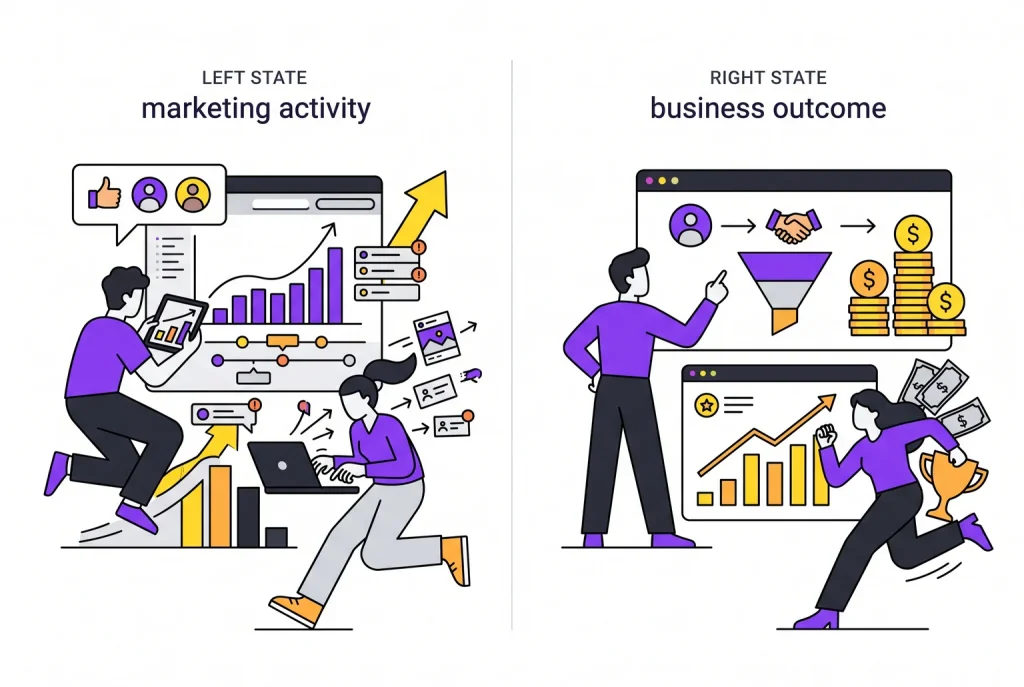
Before comparing agencies, write down what success looks like in business terms, not marketing terms. “More Instagram followers” is not a business outcome. More qualified leads reaching your sales team, more walk-ins to your store, more completed checkouts on your online shop, or wider recognition among a specific buyer group are.
This step matters because agency services map to different outcomes. An SMB trying to generate leads for a B2B service needs a different mix of SEO, content, and account-based outreach than a retail brand trying to move inventory through e-commerce ads and influencer posts. A clinic building local trust needs consistent content and reputation management more than it needs paid media at scale.
Write down two things before you take a single agency call: the specific result you want in the next six to twelve months, and how you will measure it, whether that is number of inquiries, conversion rate, revenue from online sales, or share of voice in your category.
Skipping this step is why some SMB owners end up frustrated months into a contract, paying for services that produce activity but not the result they actually needed.
Once you know your goal, check whether the agency can support it without you needing three more vendors. Many PH SMBs start with one service, usually social media or SEO, then realize six months in that they also need a new website, better content, or print materials for an event. If your agency only does one thing, you either expand the contract awkwardly or go hunting for a second and third provider, each with their own onboarding, invoicing, and communication style.
A full-service agency is built to avoid that. Industry breakdowns of full-service digital marketing agencies typically list SEO, paid media, social media, content, web development, analytics, and reporting under one roof, so businesses can consolidate vendors instead of managing several.
When you’re evaluating an agency, ask what’s actually included. A reasonably complete service list for a PH SMB looks like this:
Arc Innovation and Insights is an example of an agency built around this model, listing services across social media management, SEO, content creation, website design and development, branding, print materials, photography and AVP, and influencer marketing.
Not every SMB needs all nine services at once. But confirming the range upfront tells you whether the agency can grow with you or whether you’ll be back on Google in a year, searching for the next vendor.

A service list tells you what an agency offers, not whether they’re good at it. Ask to see actual work: social posts, website builds, ad creatives, or content, ideally from your industry. If they can’t show samples or explain their process, that’s worth noting.
Be wary of vague claims like “we deliver results” with no backing. Ask what the goal was on a past project, what they did, and what happened after. A credible agency can walk you through the process even without sharing exact client names or numbers.
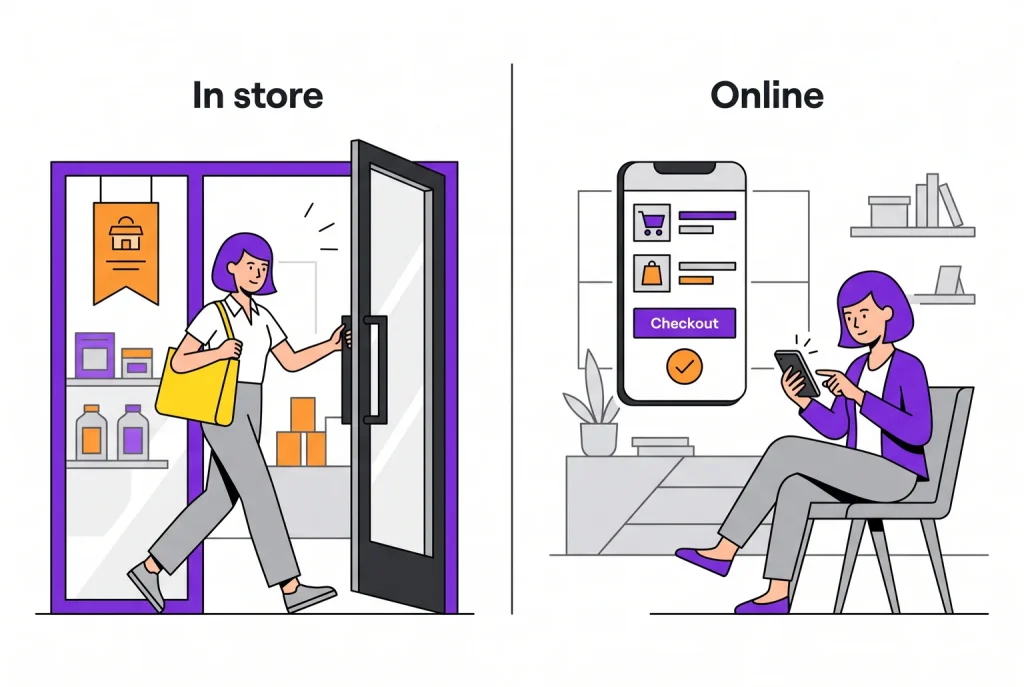
Local knowledge matters too. The Philippines has 86.75 million active social media users, 73.4% of the population, and Facebook leads with a 94.6% monthly login rate. Filipino shoppers also split behavior: 45% bought in physical stores and 54% ordered online in the same week. An agency should explain how that hybrid pattern shapes their recommendations, not just recite the stats.
If an agency describes a structured process, like Arc Innovation and Insights does for its SEO services, covering discovery, audit, strategy, implementation, and reporting, treat it as a starting point for questions. Ask to see how it played out on a real account before deciding it fits your business.
An agency relationship runs on ongoing communication, not a one-time pitch deck. Before signing on, ask who your actual point of contact will be, how often they will update you, and what a typical report looks like. A survey of 138 marketing leaders found that about 65% review their agency’s performance at least once a month, so monthly reporting paired with periodic strategy check-ins is a reasonable baseline to expect.
Ask to see a sample report before you commit. Reports built around specific templates, rather than generic updates, are linked to longer client retention, and the difference in reported satisfaction between professional and data-dump style reporting is substantial. Push agencies to connect numbers back to leads, sales, or ROI, not just likes and impressions.
Account management matters here too. Arc Innovation and Insights positions itself around long-term partnerships, naming account management as part of what it offers rather than treating each project as a one-off transaction. Ask any agency you’re considering, Arc included, to walk you through what that actually looks like month to month.

Retainers, not one-off projects, are the standard pricing model for ongoing digital marketing work in the Philippines. Reported monthly rates span a wide range, roughly ₱5,000 for a solo freelancer up to ₱300,000 or more for a full-service agency handling multiple channels, so a quote in the ₱25,000 to ₱100,000 range for social media alone isn’t unusual. That spread comes down to team size, number of channels, and how much production work is involved, not just agency reputation.
Arc Innovation and Insights doesn’t publish pricing on its site, so treat any quote as something to request directly rather than assume.
Before signing anything, check that the contract lists specific deliverables (how many posts, reports, or campaigns per month), separates agency fees from pass-through costs like ad spend, and spells out termination terms, ideally 30 to 60 days’ notice, plus what happens to your accounts and assets if you leave.

Beyond deliverables and pricing, pay attention to how an agency talks about your business. A partner that treats every recommendation as a business decision, not just a creative one, tends to stick around longer and adjust faster when something isn’t working.
Arc Innovation and Insights states that it looks at client issues from an entrepreneurial standpoint to improve ROI for creatives, and describes its approach as combining creative ideas with measurable campaigns and data-driven decisions rather than vanity metrics. It also frames its goal as becoming a long-term business partner rather than a project-based vendor.
These are the agency’s own stated values, not independently verified outcomes, so it’s worth asking any shortlisted agency, Arc included, how they’d apply that mindset to your specific goals before signing on.
Before committing to an agency, run through this:
If you want a Philippine-based option to test against this list, Arc Innovation and Insights covers most of these services and describes its approach as end-to-end solutions rather than one-off projects. Their contact page lists a Makati office address and phone number if you’d rather call than email.
Input your search keywords and press Enter.
