
November 13, 2026
If you’re running an SME in the Philippines, your customers are almost certainly on social media already. As of October 2025, the country had 95.8 million social media user identities, equal to 81.9% of the population. Filipinos also spread themselves across platforms rather than sticking to one: locally, users rank fourth globally for daily social media time and second for the number of platforms used monthly, at an average of 8.36 platforms.
Facebook and TikTok get nearly identical daily attention, 1 hour 31 minutes and 1 hour 30 minutes respectively as of August 2025. That near-tie means a brand betting everything on one platform is leaving reach on the table.
[Image failed: split screen showing a phone with Facebook open on one side and TikTok open on the other, same person’s hands holding it]
The sections ahead cover four shifts worth planning around: short-video formats, creator-led lifestyle content, Facebook and Instagram’s news-like role, and regulatory pressure on platforms. Each comes with one specific action you can apply without hiring a full marketing team.
Short-form video (clips usually under a minute, built for TikTok, Reels, and YouTube Shorts) still runs on the same fuel as always: memes, dance covers, remixes. But the clearest pattern in the Philippines lately is old material getting a second life. The 19-year-old OPM track “Ale (Nasa Langit na ba Ako)” by The Bloomfields started appearing under fit checks and makeup tutorials in late 2025, and by January 2026 it had passed 4 million TikTok views, hit No. 1 on TikTok Trending Sounds, No. 2 on Spotify Philippines Viral 50, and No. 74 on Billboard Philippines Hot 100. Around the same period, ABS-CBN’s year-end recap flagged older tracks like Connie Francis’s 1962 “Pretty Little Baby” and Kid Cudi’s “Maui Wowie” resurfacing as TikTok soundtracks, the latter after Darren Espanto performed it on ASAP Natin ‘To. Fan-driven dance challenges tied to P-pop acts, like BINI and SB19-linked routines, add another layer of the same instinct: pick a familiar hook, let people remix it into their own version.
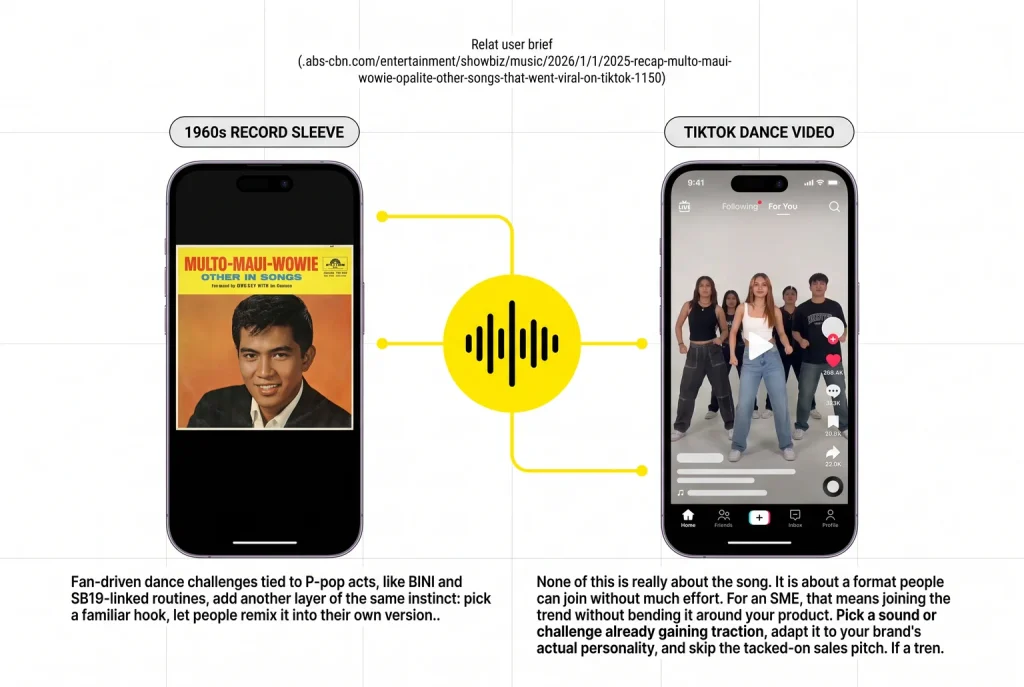
None of this is really about the song. It is about a format people can join without much effort.
For an SME, that means joining the trend without bending it around your product. Pick a sound or challenge already gaining traction, adapt it to your brand’s actual personality, and skip the tacked-on sales pitch. If a trend uses commercial music or archival footage, check licensing before posting; a viral clip pulled down for rights issues wastes the effort.
Filipino creators are building audiences by showing the unglamorous parts of adulting: moving out, tracking rent and grocery costs, figuring out a first apartment alone. Creator Angelu built a following around exactly this, posting under tags like #sololivingph and #livingalonephilippines, and she’s part of a bigger pattern tied to more Filipinos living in one-person households.
An analysis of Philippine TikTok content from 2020 to 2026 found three formats carrying this trend: personal vlogs made up 61% of solo-living content, expense-focused posts formed another chunk, and guide-style videos on finances, apartment hunting, and logistics made up 15%. TikTok’s own 2026 trend forecast points the same direction, favoring unfiltered, behind-the-scenes footage over polished production.
For brands, this content works because it builds trust through visible cost and process, not through claims. A skincare brand sponsoring a moving-out vlog gets more credit for appearing in a real budget breakdown than in a staged ad.
[Image failed: split screen of a TikTok caption listing monthly rent, groceries, and utilities next to a small product placed on the same]
The action item: instead of running polished brand ads, partner with a mid-tier lifestyle creator for a sponsored segment inside their existing format, a moving-out checklist, a budget breakdown, a meal-prep guide, where your product appears with its actual price and role. Or go further and let your own founder post a short, unedited “how we really run this business” video. Disclose costs and trade-offs honestly. Viewers spot a disguised ad fast, and it costs the creator’s trust along with yours.
While TikTok drives entertainment and lifestyle content, Facebook still carries the country’s political and public affairs conversation. A January 2024 SWS survey found that 98% of surveyed Filipinos named Facebook as a main platform for political content, ahead of YouTube at 89%. Capstone-Intel tracked more than 31 million Facebook interactions in 2025 tied to discussion of former President Rodrigo Duterte’s International Criminal Court case, which shows how fast national news can generate engagement volume on the platform.
The scale backs this up. Meta’s advertising data put Facebook at 95.8 million Philippine users and Instagram at 26.9 million in late 2025, and GMA News reported that Filipino Facebook users spent an average of 1 hour and 31 minutes daily on the Android app in August 2025, versus 34 minutes on Instagram. Facebook functions less like a personal photo album now and more like a running comment section on Philippine life, current events, and politics.
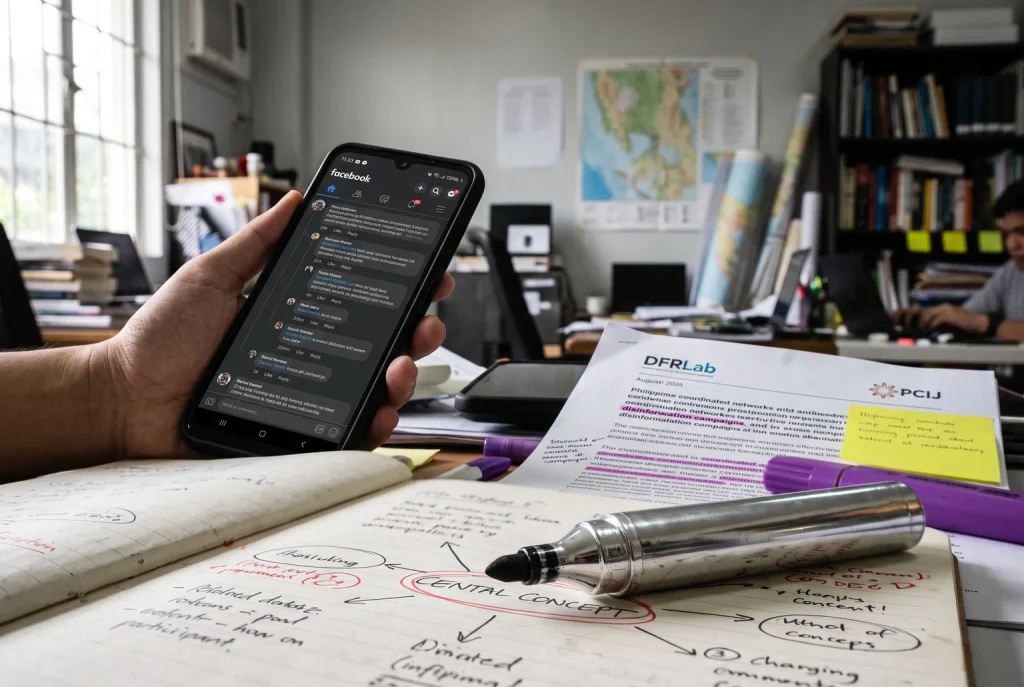
This comes with risk. Investigations from DFRLab and the Philippine Center for Investigative Journalism have documented coordinated networks and disinformation campaigns operating through Facebook pages and groups. Brands posting into this environment need to treat it as public, monitored space, not a broadcast channel.
The action item: assign someone, even part-time, to monitor comments daily, respond to misinformation about your brand quickly, and post timely commentary on relevant local events when it fits your brand voice. Build a simple escalation rule for handling comment pile-ons before they happen, not after.
Philippine regulators spent 2025 and 2026 paying closer attention to how social platforms operate here, and the pressure is coming from multiple directions at once. In September 2025, the Senate Committee on Games and Amusement issued a show-cause order against Meta-Facebook Philippines executives for skipping a hearing on online gambling ads. By August 2026, Meta had agreed to share subscriber and traffic data with Philippine authorities on child-safety concerns, a move connected to the proposed Child Online Safety and Protection Act working its way through the Senate.
Then, in September 2026, the National Privacy Commission issued show-cause orders to Meta, Roblox, Reddit, and Discord over alleged noncompliance with Data Privacy Act registration rules, while the Cybercrime Investigation and Coordinating Center separately pushed Reddit and Discord to set up local offices, briefly threatening restricted access before both platforms agreed to cooperate.
None of this adds up to a confirmed or permanent ban on any major platform. The Discord and Reddit episode was resolved through negotiation within days, and the various bills on social media franchises and algorithm disclosure remain proposals, not law. What it does show is that regulators are actively probing data practices, child safety, and platform accountability, and that scrutiny can escalate fast, sometimes with only 24 hours’ notice.
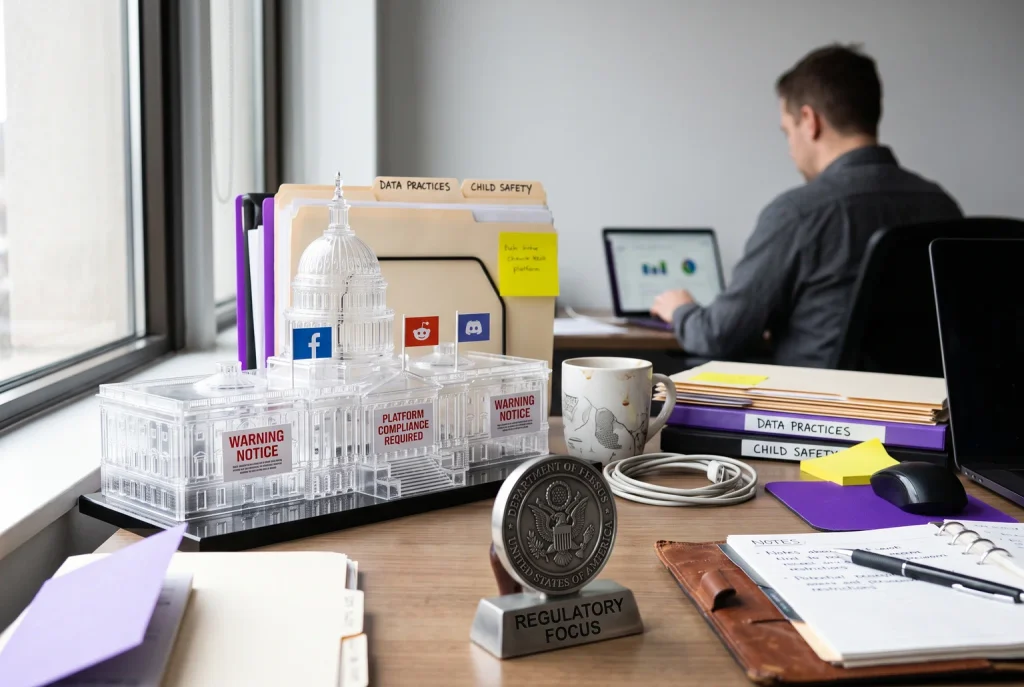
For a brand, betting your entire audience on one platform is a business risk regardless of how any single case resolves. If access to a platform were ever restricted, even temporarily, brands with no presence elsewhere would lose their audience overnight.
The practical move: keep an active presence on at least two or three platforms, maintain an email list or SMS database you fully own, and treat your website as the one channel no regulator or algorithm change can take from you.
| Trend | What’s happening | What to do |
|---|---|---|
| Short-video virality | Memes, dance covers, remixes, and nostalgia clips keep driving reach on TikTok and Reels | Jump on trending sounds fast, remix old OPM or throwback content, keep a light production style |
| Creator-led lifestyle content | Solo living, expense breakdowns, and how-to videos build trust on TikTok | Partner with creators for honest, budget-style product features instead of polished ads |
| Facebook and Instagram as conversation hubs | Comment threads function like public forums and news feeds | Post to spark discussion, monitor comments closely, respond like a person, not a press release |
| Platform regulation risk | Meta, Reddit, and Discord face active scrutiny from PH regulators, with no confirmed bans | Keep a presence on multiple platforms, build your own email or SMS list, invest in your website |
Use this table as a starting checklist, not a finished plan. Each trend needs its own content calendar, budget, and point person to actually run.
Reading the trends is the easy part. Producing short-form video on a schedule, replying to comments before a thread turns sour, tracking which platform is worth the ad spend this quarter, and keeping a backup channel ready in case regulators come knocking again all take actual staffed hours, not just good intentions.
This is the kind of ongoing work Arc Innovation and Insights handles for Philippine brands, covering strategy, content production, community management, paid social, and reporting across platforms. If your team already knows what needs to happen but not who has time to do it, that gap is where a long-term social media partner earns its keep.
Input your search keywords and press Enter.